
Program Organizing Committee (POC)
 |
Kathleen Labrie, Chair (Gemini) Kathleen is an Observatory Scientist at Gemini Observatory. She has been involved with the development of the Gemini data reduction software since she joined Gemini in 2003. Her involvement has been at all level, from developer, to manager, and also as a user through her personal astronomical research endeavours. |
 |
Xiuqin Wu Deputy chair (IPAC) Xiuqin Wu is working at IPAC, Caltech. She is the task lead for NED, the NASA/IPAC Extragalactic Database. Prior to joining NED, Xiuqin was task lead for the Science User Interface and Tools (SUIT) team of Large Synoptic Survey Telescope (LSST), led the Uplink team for Spitzer Science Center, and was the lead for user interface group in the NASA/IPAC Infrared Science Archive (IRSA) at IPAC Caltech. |
 |
Chenzhou Cui (NAOC) Chenzhou is a scientist at National Astronomical Observatory of China (NAOC). He is the Depute Director of the China National Astronomical Data Center (NADC), the PI of the Chinese Virtual Observatory (China-VO). His research focuses on Virtual Observatory, Astroinformatics, Data Management and Open Access, Astronomical Software and System, and Data-driven Astronomy Education and Public Outreach (DAEPO). He had been chairing the IVOA over 2019-2021 and the IAU Commission B2 "Data and Documentation" over 2022-2024, and is acting as Editor for "Astronomy and Computing". He has been leading the R&D of the China-VO and Data Management system of LAMOST sky survey project for more than 20 years. |
 |
Kimberly DuPrie (STScI) Kimberly is a Principal Software Engineer at the Space Telescope Science Institute where the focus of her work is the deep archive for multiple missions including HST, Kepler, TESS and JWST. She is also the associate editor of the Astrophysics Source Code Library. Prior to STScI she worked in the financial industry in Tokyo and New York, and at the Harvard-Smithsonian Center for Astrophysics where she helped develop the Chandra archive. |
 |
Mike Fitzpatrick - POC Exec (NOAO) Mike is a Principal Software Systems Engineer at NOAO, beginning his career with the IRAF Project in 1988. Since then, he has been involved in a wide range of observatory projects involving data analysis, acquisition and transport, Virtual Observatory application development and ongoing support for the IRAF system. He is currently the Lead Developer and System Architect for the NOAO Data Lab project. |
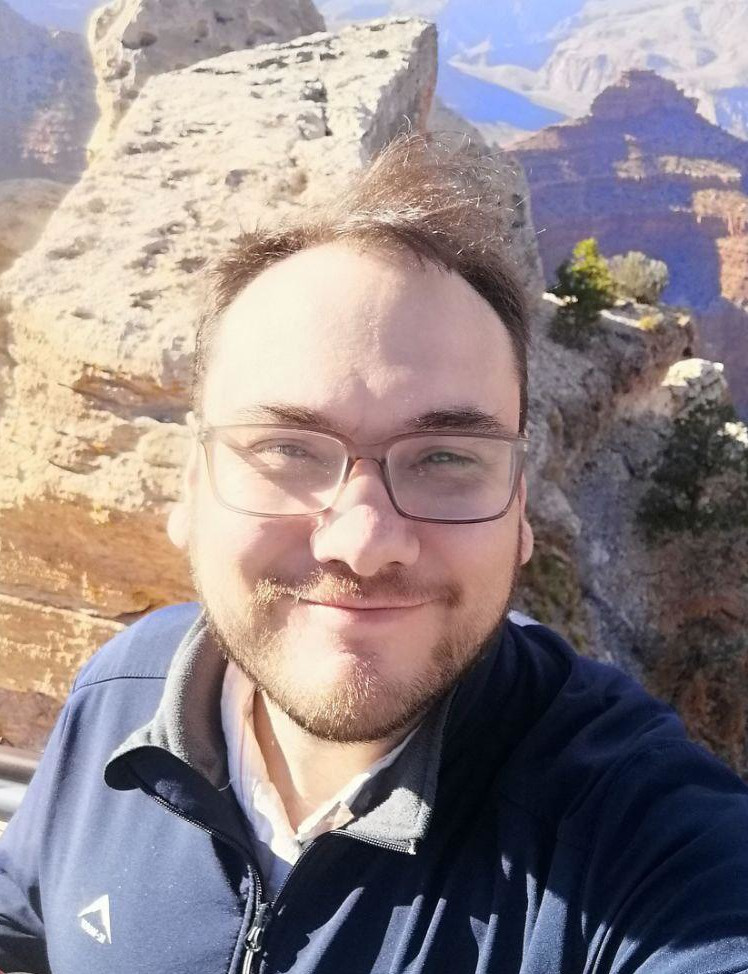 |
Benjamin Hugo (SARAO) Benjamin Hugo is a Software Developer with the South African Radio Astronomy Observatory (SARAO) in Cape Town South Africa. After joining SARAO in 2016 he was involved in telescope commissioning and operations of the 64-dish MeerKAT radio interferometer. His software interests include developing tooling in radio imaging, calibration, simulations and pipelining in support of science operations. His scientific interests are galaxy clusters, and radio polarimetry characterization and ionospheric research. He is actively involved in developing tooling for the Open Source Transient Array Radio Telescope (TART) project, being developed as a low-cost platform for human capacity development. |
 |
Hansen Jiang (Sidrat Research) Hansen is an Assistant Program Scientist at Sidrat Research. He works with astronomical data at every level, from developing reduction pipelines, to maintaining and documenting digital infrastructure, and visualizing data for scientific and public interaction. He is interested in the production, analysis, and service of data for the astronomy community. |
 |
Brian Kent (NRAO) Brian R. Kent is the Director of Science Communications with the National Radio Astronomy Observatory in Charlottesville, Virginia and is a scientist at the NRAO. His publications and studies in astrophysics and computing include scientific visualizations of a variety of theoretical and observational phenomena. He is interested in visualizing data for scientific analysis as well as reaching a broad audience with the amazing visuals that modern 3D graphics can provide. |
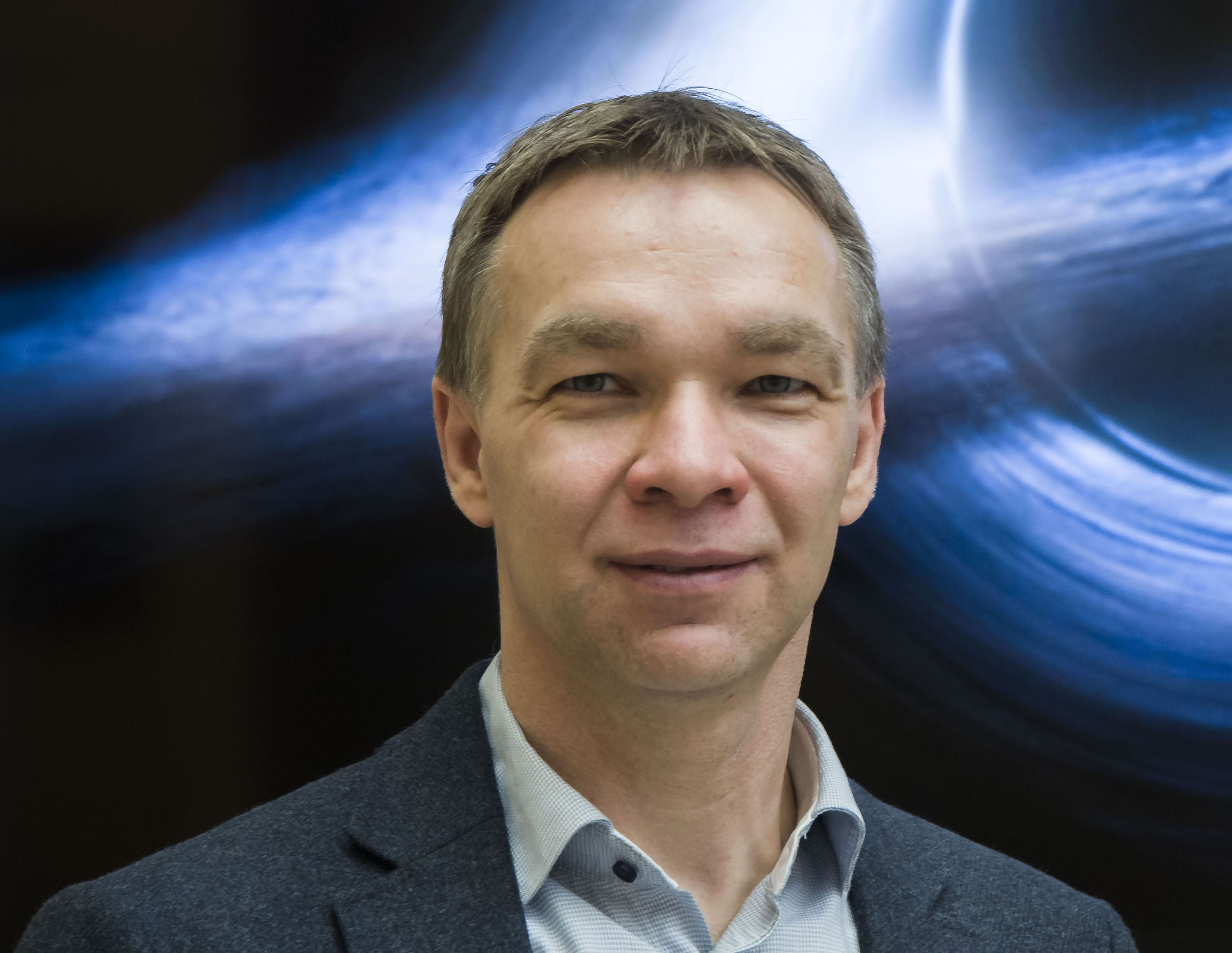 |
Michael Kramer (Mpifr Bonn ) Michael Kramer is director at the Max-Planck-Institut fuer Radioastronomie (MPIfR) and Professor for Astrophysics at the University of Manchester. His research focusses on fundamental physics using radio astronomy, especially on tests of gravity, neutron stars and black holes, and the development of new radio facilities. He co-leads a task area in the German PUNCH4NFDI consortium as part of the The National Research Data Infrastructure concentrating on data intensive astronomy and co-founder of the society for data-intensive radio astronomy (VdR). |
 |
Anaïs Oberto (CDS, Observatoire Astronomique de Strasbourg)
Anaïs is currently working as software engineer at the Strasbourg astronomical data center CDS, France. She is in charge of software developments for SIMBAD astronomical database. It includes maintaining database structure, web server, and internal clients for users maintaining the data content. She joined CDS in 2001, working on astronomical images projects, she was particularly involved into Aladin for Healpix tesselation used for HiPS standard. She has a close collaboration with ADS, other astronomical data centers, and IVOA. Anaïs is also involved in the CNRS software engineers community, helping organizing schools. |
 |
Fabio Pasian (INAF) Fabio is a senior scientist associated to INAF-OATS. In his career he led, mostly in the framework of international projects (e.g. LBT, EU/Horizon 2020 projects, Hubble, Planck, Euclid, IVOA), activities devoted to the development of computer applications for astrophysics (data processing and archiving, distributed computing, ground segment of space missions and the astronomical Virtual Observatory). Currently he is Editor-in-Chief for Elsevier's Astronomy and Computing journal. |
 |
Mubdi Rahman (Sidrat Research) Mubdi is the founder and principal of Sidrat Research. He is an Astronomer with a deep background in research, computing, management, and outreach. Originally hailing from Toronto, He has served as a Research Associate at the Dunlap Institute for Astronomy and Astrophysics, and an Assistant Research Scientist at the Johns Hopkins University. He also serves as a Scientific Editor for the American Astronomical Society Journals. |
 |
Yuji Shirasaki (NAOJ) Yuji Shirasaki is an observational astrophysicist at NAOJ. He received his PhD degree in 1997 for study of chemical composition of primary cosmic ray. After that he was involved in a GRB mission HETE-2, where he worked for development of the WXM and GRB autonomous localization system at RIKEN. In 2002 he moved to NAOJ and has been involved in Japanese VO (JVO) project, where he developed many kinds of software system: distributed computing for Subaru Suprime-Cam, JVO portal, ALMA FITS archive, distributed database system for Gaia, and so on. His current research interest is in statistical analysis of Subaru HSC survey data for understanding evolution of SMBH. |
 |
Felix Stoehr (ESO) Felix is astrophysicist at the European Southern Observatory. He is the responsible scientist for the Science Archive of the Atacama Large Millimeter/submillimeter Array (ALMA) and leads the corresponding working group. Felix started out working on galaxy formation using numerical simulations on high-performance computing systems before joining ESO to work for the HST archive and then for ALMA. Felix has a strong interest in science, machine-learning, user-centered design and in helping shape the future of astronomy. |
 |
Mark Taylor (University of Bristol) Mark's research was originally in computational condensed-matter physics, but since late last century he has been working as a software engineer in astronomy. He worked initially on data reduction software for the UK's Starlink project, and subsequently in and out of various software projects on standards and implementations concerning data exchange and tabular data, mostly while based at the University of Bristol. He has a long involvement with the Virtual Observatory and has developed and continues to work on the TOPCAT application for manipulating tables. |
 |
Peter Teuben (U.Maryland) Peter is a Principal Research Scientist at the University of Maryland. For over 30 years he has been working on radio interferometry and image analysis software and pipelines with WSRT, BIMA, CARMA, ALMA, GBT, and LMT to name a few (GIPSY, MIRIAD, CASA, LMTOY). He is also interested in simulation software, and is the maintainer of the NEMO Stellar Dynamics toolbox. More recently is has become involved in the ASCL, and now that incoming students do not know any Unix, the teaching of scientific computing using Unix. He also has a long standing involvement in ASCL, helping astronomers find codes and vice versa. |
 |
James Tocknell (AAO) James Tocknell is a software developer/data scientist/dev ops/general all rounder in the RDS team at AAO which is now part of Macquarie University. He primarily works on the Data Central science platform, but has also worked on more unusual projects such as a database for tracking fruit flies, and mobile web apps for managing fieldwork for archaeology, ecology and geoscience. He is also finishing up his PhD on Jets from Protoplanetary Discs, having previously worked on jets from planetary nebulae and flaring from the galactic centre. |
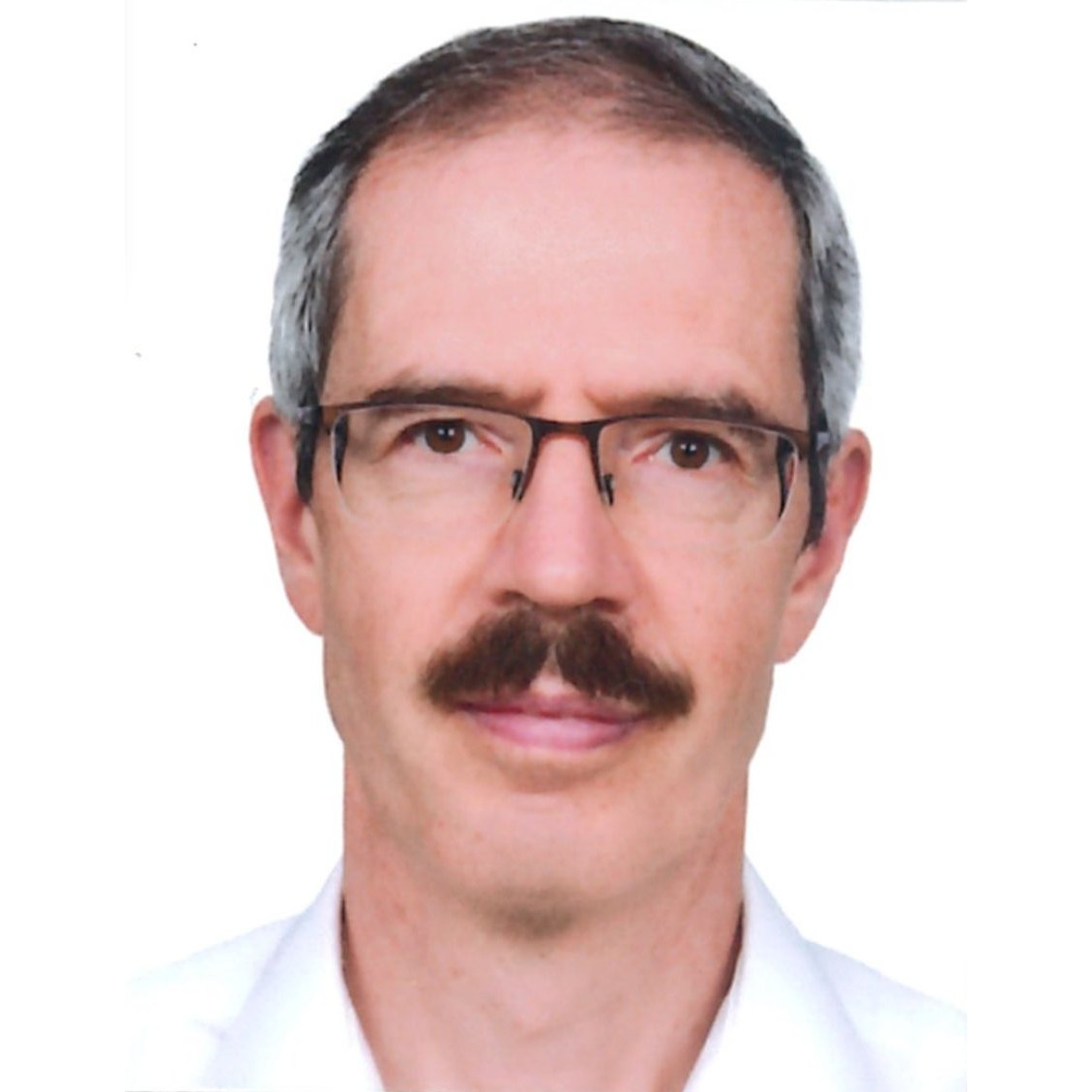 |
Stefan Wagner (Heidelberg) Stefan Wagner is at the Observatory of Heidelberg University, Germany. He is also director of the HESS observatory and spokesperson of the HESS collaboration. He has been active in multifrequency research in the last 30 years, working in all frequency bands from radio to gamma-ray astronomy. He is also engaged in research data management across natural sciences (PUNCH4NFDI). As a founding member of the new German center for astrophysics and the VdR, a society for data-intensive radio astronomy, he supports work on big data management in astrophysics. |
 |
Kai Polsterer (HITS gGmbH)
|
|
Andreas Wicenec (UWA)
|
 kathleen.labrie@
POC Internal Pages
The ADASS Program Organizing Committee internal pages can be found here. (log-in required)